JAPAN INTERNATIONAL COOPERATION AGENCY (JICA) AND THE DEVELOPMENT OF RICE INDUSTRY IN SOUTHEASTERN NIGERIA, 1976-1993
MATHIAS IKECHUKWU ASADU.
“JAPAN INTERNATIONAL COOPERATION AGENCY (JICA) AND THE DEVELOPMENT OF RICE INDUSTRY IN SOUTHEASTERN NIGERIA, 1976-1993.”
Igbo Studies Review (ISR)
, Goldline & Jacobs Publishing
, no. 11-12, 2026
, pp. 34-63
.
This study investigated the origins, implementation, and impact of post‑civil war agricultural initiatives in southeastern Nigeria, focusing on the Lower Anambra Irrigation Project. The objective is to examine how post‑1967–1970 policies sought to enhance food security and commercial rice production among war returnees. Methodologically, the research draws on archival materials to trace the establishment of river basin authorities, oral interviews to capture farmers’ perspectives—particularly in light of the project’s current moribund state—and secondary sources to situate the findings within existing literature. The findings reveal that Asika Ukpabi’s diplomatic mission to Japan initiated a process that identified the region’s potential for large‑scale rice cultivation, leading to the creation of the Anambra‑Imo River Basin Authority in 1976 and subsequent collaboration with the Japanese International Cooperation Agency. The project provided new rice varieties, irrigation facilities, mills, and suitable land, which farmers embraced as transformative, despite criticisms of dependency and external influence. The study concludes that while the Lower Anambra Irrigation Project significantly advanced rice production and demonstrated the benefits of international collaboration, its decline underscores the challenges of sustaining large‑scale agricultural initiatives.
Introduction
Food is an integral part of man’s existence, and the livelihood of most African families depends on agriculture: about 70% of Africans live in rural areas, and 90% of these heavily rely on agriculture.[1] Towards the middle of the 20th century, the world was facing untold narratives of the consequences of hunger orchestrated by the Second World War. To address this scenario, agricultural development was seen as a panacea, and countries consequently made serious efforts to harness the potential of water resources worldwide. Irrigation agriculture, especially in the paddy fields, was canvassed in different countries as the prime solution to shore up regular nutritional intake of food for the growing population in Africa; a development which lends credence to Thomas Malthus logic that economic and social changes in population would affect the food production and availability; while the population was growing geometrically, food production was increasing arithmetically.[2] To ensure a steady supply of food, rice production has received a boost in recent years, as the crop's intake, nutritional value, and calorie content have made it a staple. Realizing the level of food shortages, international communities have had a number of conferences and summits dealing specifically with the problems and impact of food scarcity, which militate against food security, and suggesting possible ways to battle the challenges of food. For example, the World Food Conference of 1974 brought many countries to a round table with the primary objective of finding a solution to the menacing threat of food insecurity. [3]
In Nigeria, the federal government has attempted to stem the tide of hunger, especially after the influx of petrodollars into agriculture. Historically, after the taste of oil money, which proved to be a “Dutch Disease,”[4] Nigeria abandoned food crops for oil revenues. As the food economy deteriorated, especially after the civil war, the federal government adopted numerous agricultural policies aimed at forestalling poverty and food insecurity and, above all, enhancing the socio-economic status of those in rural communities. This is important given that food production in Nigeria received low patronage despite the government's efforts to encourage rural dwellers to be more active in farming. Some of these developmental efforts in agriculture include Agricultural Development Projects (ADP), the Nigerian Agricultural and Co-Operative Bank (NACB), National Accelerated Food Production Project (NAFPP), the River Basin Development Authorities (RBDAs), Operation Feed the Nation (OFN), Green Revolution Program (GRP), and so on.
Apart from these local policies and programs, Nigeria has joined other African countries to battle the challenges of food production in Sub-Saharan Africa. For instance, she was a member of the Lagos Plan of Action, adopted by the Organization of African Unity Summit in 1981, where they placed priority on agricultural development. She also joined in Addis Ababa at the 21st OAU Summit, where African governments agreed to double their budgetary allocations to enhance the agricultural sector, which led to public investment of 20-25% between 1985 and 1989, being a recommendation of the World Bank and other international agencies [5] such as the Food and Agriculture Organization of the United Nations (FAO).
In addition, the federal government, in a move to sustain its citizenry, especially those in rural areas and its parasitic urbanities, took a bold step toward adopting new technologies in rice production. In readiness for these huge projects, the federal government had to liaise and in some cases borrow significant amounts of money from the donor communities such as the World Bank, United States Agency for International Development (USAID), JICA, and so on for irrigation projects, especially in the development of the Lower Anambra Irrigation Project located in Omor and other communities where the scheme operated, such as Umumbo, Umuelu, Igbonkwu, Umulokpa, , Anaku, Ifite-Ogwari. Ormasi- Uno, and Umueje.[6] Some areas of the Lower Anambra Irrigation Project (LAIP) were developed to provide year-round irrigation for paddy on about 13,000 hectares of land.[7]
JICA's activities have been remarkable in Southeastern Nigeria. Through it, many areas of land in the region were cleared for agricultural activities to meet the demands of the Anambra Imo-Rivers Basin and Rural Development Authority for food crops such as sorghum, maize, vegetables, and millets, and, above all, rice. As the project progressed in the Basin, the Lower Anambra Irrigation Project (LAIP) saw remarkable improvements in rice quantity and quality, which, in turn, increased farmers’ incomes and living standards. Also, with support from JICA extension agents, illiterate farmers were able to effectively operate their farms, thereby significantly enhancing their skills. Again, the irrigation technology, which was famously preached to farmers, enabled twice-yearly cultivation of the field and gradually became a better employment opportunity.
Other developments of the JICA operation that supported farmers' resilience included land management techniques and practices, new technologies for pest and disease management, and new rice cultivation and processing methods, such as milling rather than pounding the grains. While JICA provided dams and reservoirs for farmers and other water users, the government, through revenue collected from rice farmers in areas of land allocation, was able to redistribute taxes for the good of the entire population. The achievements of JICA seem to be a semblance of what the World Bank-ADP program had done in the northern part of the country prior to the establishment of the River Basin Development Authority, which engaged JICA for water management for modern agricultural development in the Southeast. Thus, Njoku posits,
The program helped to popularize the use of fertilizers, herbicides, fungicides and improved seeds among farmers in parts of the country. It has been claimed that with ADP’s support, over 9,000 bore holes with hard pumps, nearly 12,000 129 earth dams, 922 farm service centers 47 farm training… 12 fish ponds were constructed.[8]
JICA programs in the rural areas supported many farmers, but, as it were, these programs did not take Nigeria to the Promised Land, as we shall see, given the federal government of Nigeria's inability to maintain such facilities built by JICA. Neither did the project enhance the government's financial and input support to the farmers after the project elapsed. Rather, what is observed is the deterioration of modern technical irrigation facilities of such magnitude, originally designed to meet the aspirations and demands of the growing population.
Theoretical Framework
This work adopts a liberal theory. This theory was first propounded by the political theorist John Locke,[9] but later took on more meaning for Adam Smith. [10]The major feature of liberal theory is its belief in human reason to promote a more prosperous, free, and peaceful world, which aligns with JICA's objective. Liberalism has been employed in literature in different ways, but is currently anchored in three major interrelated principles, viz., rejection of the use of power in politics and war as the only game nations should pursue as the only means of achieving national security.[11] and finally mutual cooperation for the benefit of all.[12]
One of the core assumptions of liberalism is that some states can mutually cooperate for economic or political gain.[13] Theorists of this assumption believe that each state can seek personal gains, not minding some interests, which can foster domestic or international cooperation. [14]
History of River Basins in Nigeria
The idea of the massive use of water resources in Nigeria was born during the colonial period. Balogun and Ukeje asserted that the development of water resources in Nigeria received significant attention in the reports of the International Bank for Reconstruction and Development (IBRD) in 1955, followed by the First National Development Plan (1962-1968).[15] However, it seems nothing reasonable was done to realize this noble objective.
By 1973, the two River Basin Development Authorities (RBDA), viz-a-viz the Chad Basin and the Sokoto River Basin Development Authorities, were established, but comprehensive efforts to increase river basins and water resources for irrigation began in 1976, making the efforts prior to 1976 less comprehensive.[16] Thus, it could be said that in Nigeria, the River Basin Development Authority was established in 1975 by the then military government of Murtala Mohammed, who set up the Niger Basin, the Benue Basin, the Cross River Basin, the Ogun Basin, and the Hadjia River Development Authorities.[17] By 1976, the river basin was expanded to ten (10) basins, namely the Sokoto Rima, the Hadjia Jam’are, the Chad Basin, the Upper Benue, the Lower Benue, the Cross River, the Anambra, Imo, the Niger River, the Ogun-Oshun, and the Benin River Basin Development Authorities.[18] It was believed that these river basins would increase the nation's agricultural potential, which was gradually emerging from its 30-month civil war that left the core Southeast in a dilapidated state.
To achieve effective irrigation nationwide, in 1984, these basins were expanded to 18 authorities, covering all states except Lagos.[19] By 1985/1986, under the military rule of Babangida, the number of Basins was further slashed from eighteen to eleven so that the perceived constitutional roles and mandates established would be met, and to be more focused on the comprehensive development of interstate river basins.[20]
The functions of the Authority, according to the establishment, include:
The promotion of land and water development schemes for the primary purpose of increasing agricultural and fish production.
To undertake schemes for the control of floods and soil erosion, including afforestation.
To undertake schemes for the control and exploitation of underground water resources
To construct and maintain dams, polders, wells, bore-holes, irrigation and drainage canals, and other works essential for the smooth running of the functions of the authority,
To develop and mechanize farming of crops, supply of water for irrigation and forestry purposes to private farmers for free
To develop plantations, livestock, and to lease plantations and ranches to private farmers or associations.
To process food and other crops and livestock products and
To control pollution of the rivers and lakes in their respective regions.[21]
Besides, beyond their original written constitutional roles to feed the masses in general, they were further saddled with raising the incomes of rural farmers and with any issue concerning public water management. However, of interest is that, prior to the establishment of the Authority, the Eastern region had been losing a significant portion of its cultivated land to floods and, at times, to the dry season. For instance, as early as 1961 – 1962, it was reported that the long dry period adversely affected rice production throughout Eastern Nigeria, leading to considerably lower yields than in previous seasons, and at times, such inclement weather resulted in complete crop loss.[22] After the civil war, 1967-1970, there was a severe drought that lasted from 1972-1974, regarded as the worst in Nigeria.[23] After the war, there were serious efforts to restore the region to her past agricultural glory.
First, there was a move to restore higher education institutions to equip students in the region for immediate agricultural development. For instance, by 1971, the Ministry of Economic Development and Reconstruction in Lagos requested that USAID assist in the rehabilitation of the School of Agriculture, Umudike, which had been badly damaged by the war.[24] In addition, after resettlement, the government of the East Central State prioritized restoring the productive capacity of the people, with the ultimate aim of providing a basis for self-sustaining recovery and growth through agriculture. [25]
The coming of and the extensive development of irrigation for rice cultivation as a revolutionary scheme to boaster food availability, in the region began under the then East Central State Administrator, Ukpabi Asika who after observing how famished Ndigbo were took a tour to Japan in 1973 to seal agreement with NIPPON KOEI of Japan to collaborate with the Agricultural Development Authority (ADA) of the region to help recover about 15,000 acres of new farm land as a basis for detailed feasibility study for the main project involving the recovery of 650,000 acres of new farmland with controlled irrigation and drainage systems. Interestingly, NIPPON KOEI of Japan reclaimed over 1,000 acres of land, a feat made possible with the assistance of seven Japanese irrigation and canal construction experts at the time.[26]
Also, the Asika Ukpabi-led administration in the East Central State of Nigeria, in collaboration with the Agricultural Development Authority (ADA), further enhanced the land recovery project for paddy development. Subsequently, a master plan for the environment was prepared by 1974; it comprised seven irrigation projects, with the Lower Anambra irrigation project being the largest (about 5000 ha) and Uzo-Uwani about 1000 ha.[27] It was this massive agricultural project in view that necessitated the assistance of JICA because. They also realized that the most sensible approach for food security was to effectively exploit river resources for agricultural development in rural communities. [28] Njoku concurs, stating that the idea of harnessing rivers and their basins for the orderly and optimal application of resources has inspired many regional and rural projects across the world, including Nigeria.[29]
History and Objective of JICA
The history of Japanese International Cooperation Agency (JICA) [30] could be traced to the establishment of the Federation of Japan Overseas Association in 1954 [31] and subsequently, mutated to other names such as Overseas Technical Cooperation Agency in 1962, in 1963 to Japan Emigration Services, in 1965 to Japan Overseas Cooperation Volunteers, and in 1974, it metamorphosed to Japan International Cooperation Agency[32] as an Act of Special public institution.[33] The history of Japan joining other donor organizations was also laced with the Colombo Plan. The Colombo Plan was an intergovernmental organization designed to strengthen the relationship with Asia and the Pacific in 1951 with the aim of promoting partnership for socio-economic development of the member countries such as Ceylon (Sri Lanka) Australia, Canada, New Zealand, Pakistan, United Kingdoms, Malaya with the ultimate objective of promoting training and education, provision of food supplies, health, and loan facilities to member countries. It was an ambitious plan to overcome stressful economic challenges faced by some Asians countries colonized by Britain and to help overcome the effects of the Second World War, which became a threat to the Asians.[34]
Though it has been argued in some quarters that Japan lacked a clear policy direction in its aid-giving, it seems Japan sought a fair share in carving out economic interests in many countries, especially in Africa. For example, it is believed that the primary purpose of JICA was to assist Japan primarily, and as its economic activities progressed, the value of yen continued increasing drastically to the point that by the 1970s, Japan was the second largest economy in the world and was subsequently drawn by the USA to be part of the countries supporting the underdeveloped economy.[35] In addition, it was also believed that the criticism of the United States Congress leveled at Japan as a founding member of G-5 in early 1975, with no corresponding contributions to the economic development, peace, and unity of the world, subtly dragged Japan to share the cost of “maintenance” vis-à-vis hegemony in the developing economies. This is because Japan had a “security free ride” from the United States, which probably gave it the muscle to rub shoulders with the USA in terms of wealth creation.[36]
Ever since its formation in 1974, JICA has remained under the jurisdiction of the Ministry of Foreign Affairs; with an overseas offices in more than 150 countries and had since its inception rolled out trillions of Japanese yen[37] which it contributed for the promotion of international development by supporting the economic recovery, and economic stability of the developing economies either through direct donation as bilateral agreement or multilateral aid through other international agencies and organizations in form of technical cooperation earth wide.[38]For example, in the 1970s and 1980s, when many African countries struggled to cope with worsening food insecurity, Ryoichi Sasakawa enlisted Norman Borlaug, an agronomist who led the “Green Revolution” in South Asia in the 1960s, to repeat the feat in Ethiopia. Ever since then, Nigeria and Uganda have benefited from this foundation, heavily sponsored by JICA. Sasakawa has trained people to become fertilizer and seed dealers and has trained some of the Ugandan government’s agricultural extension agents.[39] Also, JICA assisted South Sudan in developing its agricultural master plan after it gained independence in July 2007, and has been popularizing irrigation pumps and facilities in Egypt for many years to reduce overdependence on the Nile River.[40]
To realize the primary objective of promotion of high quality and inclusive socio-economic development as well as stabilization of different societies in the developing economy, the following objectives have been her guiding principles:
The development of Japan
Promotion of international cooperation
Increasing capacity for public investment
Disaster and risk reduction and climate change
Public-private partnership
Infrastructural development and macro-economic activities
Improving business environment, trade, and investment
Promoting local economy and industry and contributing proactively to peace
Reducing hunger through equitable growth
Improving governance
Tackling complex issues flexibly with the field-based approach by fostering expertise for promoting professional solutions.
Addressing the global agenda for peace and human security.[41]
In order to achieve the following objectives, JICA had on several occasions adopted a face-to-face approach and training and participation in some long-term economic growth and poverty reduction involving the local smallholder farmers, as the case may be, to ensure economic stability and “inclusive and dynamic development” for poverty reduction and promotion of Japan’s security and prosperity.[42] For example, the Sasakawa Foundation, with support from JICA, has engaged some universities in northern Nigeria, such as Ahmadu Bello University, Zaria, Bayero University, Kano, and Adamawa State University, to train students through the Sasakawa Africa Fund for Extension Education (SAFE). This program focuses on training students for effective extension work to help farmers improve crop production, post-harvest handling, irrigation, and more.[43]
In view of the above, Japan had established some economic and bilateral agreements before the development of the river basin in Southeastern Nigeria. For example, Nigeria had been taking loan facilities from Japan before the civil war. For example, the Arewa Textile Expansion Project was supported by a loan of N1.26 billion with interest of 5.75, and the United Nigerian Textiles expansion Project of 1966.[44] After the war, Nigerian-Japanese economic ties continued, leading to other loans such as the Kainji Dan and NEPA Power Distribution Project of 1972, the Nigeria Railway Expansion Project of 1974.[45]
Funding of the Basin
In 1976, the Act that promulgated AIRBDA was decreed. [46] In 1978, the project that the Agricultural Development Authority (ADA) was already executing was inherited and transferred to the River Basin Authority, and consequently, the Nigerian government, in agreement with JICA, entered into a contract of 16.9 billion yen with an interest rate of 3.5% per annum and 10 years moratorium; thereby making it possible for the project to start in 1981.[47] Chife put it this way- that with this agreement of (96.9 billion naira or $99.41 million) with a 3.50 interest rate in naira sealed on 24th July, 1981, the Lower Anambra River Irrigation Project kicked off. [48] After completing the loan processes, other supporting international agencies assisted with irrigation work in the LAIP and Ibu dan in Imo state, including the Food and Agriculture Organization (FAO). They have been very active in some agricultural development in Nigeria to the point that from 1976 when the Basin was established to 2012, the organization had sponsored one hundred and eleven (111) projects with a total value of approximately $70, million though not only in agriculture but in such areas as technical development, emergency responses, rehabilitation in areas of agriculture and natural resources which demands technical expertise, policy advice for the development of crops, fisheries, forestry, livestock, development of local skills[49] and so on. For example, in 1994, JICA supported the National Water Resources Master Plan Draft and also provided Grant Aid to Oyo State to improve water supply to achieve zero tolerance for Guinea worm.[50] Again, JICA supported the Kura rice parboiler project in Kano State and the Kura rice miller project for the training of parboilers and millers, respectively.[51]
Irrigation projects in Southeastern Nigeria seem not to have been fully successful without international agencies on the ground, as they have the capabilities for such technological development, and that partnership and the transfer of technology are essential for quick, immediate development. For instance, the Adarice irrigation was supported by the World Bank, and the LAIP was conspicuously supported by JICA, and so on. In view of this, Katherin said that effective development incorporates international and bilateral agreements, with an underlying national commitment to development partners to sustainably use shared resources for optimal development and cooperation to actualize the shared vision.[52] Citing World Bank that had committed to supporting the member states of NBA (Niger Basin Authority) as they embark on reforms which hold promises of unleashing water resources development potential, she further posits that in the march towards this project of river development, development partners (donors) should put aside all the political inclinations and put aside any individual preferences for national investment with the ultimate objective of finding regional solutions for the benefits of those using river resources in Africa especially in Nigeria.[53]
JICA Achievements
Prior to JICA, farmers faced a major challenge: they had insufficient seed. Where they existed, they were prone to rice diseases and lacked modern technology to facilitate adequate production. For instance, according to the report from the Agricultural Division of 1961 – 1962, the demand for BG.79 seeds was considerably higher than in 1960/61 and in Adani, where mechanized farming in the swamp was attacked by army worms.[54] These had to be addressed by JICA, by providing improved seeds to farmers and by digging numerous canals and dams.[55] This is one of the ways it fulfills one of its major mandates. JICA, through the Authority, facilitated adequate use of water resources in the Southeast for agricultural purposes.
JICA built one of the largest irrigation projects in Southern Nigeria, which contributed to the massive expansion of rice cultivation in Eastern Nigeria. These water resources have been made possible through JICA's massive construction of irrigation projects in the Lower Anambra lowland, popularly known as the Lower Anambra Irrigation Project (LAIP). Irrigation facilities provided by JICA enabled a large number of migrant farmers to relocate to LAIP areas, enabling easier rice cultivation in flooded areas.
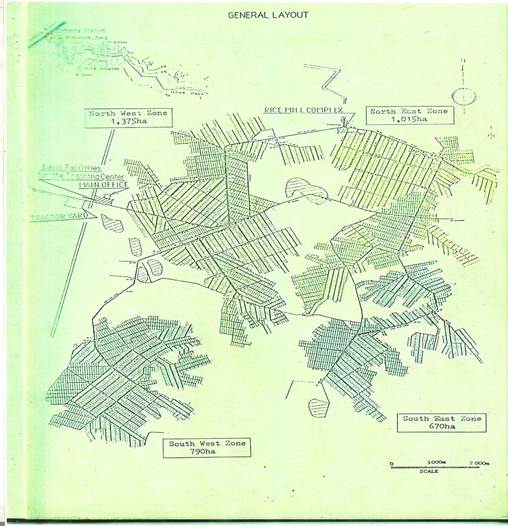
Further, before these huge projects by Japan, rice cultivation within the area largely depended on rainfall, and farmers found it difficult to irrigate their fields because the existing irrigation facilities were very unsatisfactory and, as such, did not support massive and commercial rice production, and on some occasions, they abandoned the rice field because of drought in the area. According to Chigozie, prior to the large project, there were irrigation projects, but on most occasions, an adequate water supply was very difficult to obtain. He also observed that the World Bank had done its best to provide water resources for farmers, but the government of Anambra State (as then known before the Creation of Enugu and Ebonyi States) was not adequately addressing their predicament in rice irrigation. Some people became absorbed in giving and receiving bribes to the ad hoc staff of the Bank, else your field will not be irrigated, but lauded the Japanese government for taking the bull by the horns in supporting and implementing such projects and supervising them to the end. The result was what you see: well-designed rice fields divided into four geographical areas for easy identification, drainage, allocation, and, above all, the easy collection of land rent from the farmers.[56]
The figure below shows the general layout of the JICA-developed land project at LAIP.
Source: Federal Republic of Niger, Anambra –Imo River Development Authority, lower Anambra Irrigation Project. Bi-Monthly Progress Report No. 41, May-June 1990. NIPPON KOEI Co., Ltd. Tokyo P.2
In addition, Ozor posits that the Japanese activities in the LAIP will remain indelible in the minds of the Southeasterners who love farming, especially rice, since no other agencies have equaled them in their support to farmers. Thus:
If other agencies such as World Bank, USAID, FAO, UNDP among others could devote their attention to the needs of African farmers like the Japanese in sophisticated rice field constructions, canals and dams, much repetition of works in the rice fields will not occur. Japanese were more sincere, tolerant, and focused on the small farmers' needs to the point that they required farmers to report their observations, challenges, and progress to the Agronomist Department of the River Basin and to write petitions against any contractor (expatriate) or indigens without fear of molestation, intimidation, and deprivation.[57]
In view of the above, many ad hoc staff on the project felt free to partner with the Japanese company that handled the contract. The above also shows that, despite their seeming ignorance, farmers are meticulous when working with these agencies on their various projects in South-eastern Nigeria.
In another instance, JICA promoted human capacity development among farmers by training local rice farmers in advanced, well-prepared cultivation methods. For instance, according to Udechukwu, he reminisces about when they cultivated rice in relatively sloppy areas, thinking it did not affect the paddy, but was later informed by JICA to jettison such practices because fertilizers quickly leach into the sloppy areas.[58] Okpara also spoke on the loss of rice after harvesting but the use of sophisticated machines of JICA made it easy for them to reclaim virtually all the rice they processed.[59] To ensure the appropriate use of the new technology, JICA had, on different occasions, sent local farmers and staff of the Basin to Japan for practical training in best rice agronomy. This enabled the staff of the Basin to be up to date with modern information on rice development. It also enabled farmers to choose the best rice seed capable of producing richly, even under the stresses it can endure in difficult conditions. Odimma observes that they received different rice seeds from the Japanese and were told to prepare their nurseries differently to carefully observe their yields. And by doing so, rice farmers in the LAIP were able to choose the best seeds instead of relying on rumor and hearsay in their seed selection.[60]
JICA also supported the River Basin extension services, which many farmers outside the rice industry lacked; thereby making it easier for farmers to stay abreast of developments in rice technology and making production techniques more attractive. As such, nothing new in rice development happened without their knowledge. [61] Through these agents, information was easier for farmers and others to access via JICA-trained agronomists. Egwu reported that, at that time, the agronomists trained by JICA had become experts. They were trained to spread information on seeds and cultivation practices to prevent loss. Agronomists trained by JICA were so scarce that their services were needed in most parts of Igboland, yet there were not enough personnel. Emeka, a trained agronomist by JICA, concurs, stating that rice cultivation in LAIP was successful because the agronomists trained by JICA were determined to root out hunger in Igboland and beyond and see that Igboland will be the center of rice cultivation in Nigeria - a project which they are also working hard to achieve.[62]
In an effort to ensure that Africans become masters of their own technical skills, such as tractor operation, JICA trained some farmers to become experts in rice cultivation using tractors. For example, the Japanese selected farmers from Umunbo, Umuerum, Omor, and Igbakwu in Ayamelum LGA and trained them in tractor operation in their training ground at the LAIP office in Omor. Uchefuna, trained by JICA as a tractor operator said that they labored so much as rice farmers removing dried weeds and maintaining their farms because of poor harrowing and leveling by few tractor operators who came down from Enugu but did not know how to manipulate tractors well and as a consequence, rice farmers had little to eat and sale because of poor performances of rice but immediately after their training as tractor operators, rice farming techniques different from earlier operators changed and I saw my social and financial status elevated as I can cultivate my own plots on time and be hired by many farmers to cultivate their lands. We did not know when the quack operators from Enugu relocated to other places because our performances outpaced their techniques, and we began to see them as quacks.[63] Also, Anedo posits that after their training as operators, he has been moving from Umuerum to Abakaliki, Adani, and many other places in southeastern Nigeria as a renowned operator, and this has made him busy in both dry and rainy season cultivation.[64] Okeke, who was also trained as a tractor operator, said that after Japan’s training, no other agency ever cared to know about special skill acquisition, such as pump technician, irrigation, and drainage in water management. For example, Engr. Erondu, who was trained in water management, posits that, prior to their training, the farmers knew little about irrigation management. They did not know when to add and reduce water effectively in the farm, but JICA training exposed both the farmers and the newly trained technicians to when and how to manage the irrigation system in rice cultivation.[65] Mbachu added that people add fertilizer at any given water quantity, but after our training, we realized when to add and reduce water for better yield. We also know how to saturate the rice field with water based on the plant's maturity. [66]Everything seemed perfect after their training, but as they aged, new operators seemed to be more concerned with money than with good skills.[67] The earlier trainees were instrumental in training most tractor operators in southeastern Nigeria.
JICA also facilitated training for personnel in irrigation and drainage management. For instance, the current traditional ruler of Umubo was trained in irrigation and drainage systems. According to him, his popularity stemmed from his effective management of the irrigation and drainage systems in the field. Most farmers wanted to work with him as he never disappointed them. I quickly live in the morning and evening to supervise many rice fields, even to check rice fields whose owners I did not know and add water accordingly. Everyone liked me, and when the opportunity to serve my people of Umunbo came, they did not resist, knowing that I deserved more and would do more. My success stories started in rice cultivation, to the irrigation and management system. We say kudos to JICA for being unselfish in information dissemination.[68] He also added that good work pays a lot. Stating that the former Hon. Member representing Oyi Ayamelum Federal Constituency, Gabriel Onyeweife, was also trained in irrigation and drainage systems, from where he made huge money that enabled them to be known as a person in their communities, and when the time came for the people to demonstrate their confidence in him, they did just so.[69]
The aim, according to Nnochirim, was to prevent the Japanese from permanently remaining in the area and to encourage African farmers not to rely on foreign operators every time. He also pointed out that, since the rice-cultivation area was extensive, having hundreds of tractor operators cultivate it twice a year would be challenging. In view of this, the Japanese not only saw the need to train the early operators but also called for those willing to do so to be informed.[70] Ojemba added that “When the expected number of those required to be trained were not met, JICA advertised the opportunity in the local villages so as to have a reasonable number of them steadily and regularly”. The engineers also” allowed them to participate in the repair processes to enable them to have basic ideas on fixing certain parts, repairing them in cases of sudden breakdown and damage.”[71]
Apart from tractors, JICA trained some rice farmers to operate combined harvesters and other farm machinery. Egwu had reported that of late, because some of these early trainees did not continue to operate such harvesters since they were not readily available because of old age and sickness, the operators of such machines became scarce, and as such, many new operators do not know how to cultivate rice, which needed more expertise than cassava and other crops that can be cultivated in ridges.[72]JICA also took responsibility for installing one of the largest rice processing facilities in the region. These integrated rice mills in LAIP, in turn, revolutionized rice post-harvest processing. It made it easier for rice farmers to abandon some manual labor in processing the grain. Some of these facilities could be seen in the photos below.
The combined effects of these are many. They include; (1)the desire to farm rice (2) it checked rural migration (3) it increased the income of the household farmers in the rural communities (4) it made it feasible to ensure double cropping in eastern Nigeria (5) the water resources were well utilized for agricultural development (6) it reduced poverty in the rural communities (7) it became a strong source of employment (8) it helped in the match toward food security and it gave the people good sense of belonging in the national development of irrigation scheme which was very tangential for agricultural development.
Prior to JICA, rice irrigation in the Southeast had not been developed to the extent of irrigating such a large area for rice cultivation and other crops such as yams and cassava. As such, JICA had a pact to raise land values, and its contribution to irrigation increased production and returns from the use of factors of production, such as land, labor, and capital.
Also, there was an increase in farm size, output, farm income, farmers' productivity, and yield.[73] In fact, it was JICA's custom to train rice researchers in Africa to be effective in food production. This is especially important for African rice researchers. Speaking on this, Ehara said that the aim of developing core rice researchers in Sub-Saharan Africa is to promote rice production, and this idea is anchored in the belief that these researchers will take the lead in advancing rice production in their respective regions.[74] The Japanese demonstrated these in their rice projects in LAIP.
In addition, the Ibu dam irrigation project, located at Ndi-Onuoha in Okigwe Local Government Area, constructed a dam 22 meters high to irrigate a net area of 3,500 hectares. In LAIP, the project covers 3850 hectares for rice production and an additional 350 hectares for staple food crops, including cassava, maize, yams, and vegetables. The project is capable of producing over 30,800 tons of paddy rice or 17,864 tons of processed rice. Over 7000 families benefited directly from the project every cropping season. Okpara, one of the beneficiaries, noted that cultivating rice twice a year improved his family's situation. “I can now boast of three-square meals a day, but prior to that time, many rice farmers were obviously poor because of consistently poor harvests, and they depended on hearsay. We were privileged to be present during demonstrations, and that gave us opportunities to excel. [75] Udechukwu added, “No JICA, no reliable irrigation scheme in Omor and environ”. And after JICA, we are gradually sinking back to where we were before their intervention. The Japanese are “skillful and determined- ready to share ideas” and to assist farmers in reaching their targets. “I have yet to see any agency serious in their business like the Japanese. They were so dear and brotherly in teaching, and that is why most of us who were not educated were able to understand and advance in the rice industry.”[76] There was a series of canals, farm roads, drains, irrigation systems, rice mill complexes, plants, and machinery for double-cropping rice. [77]
Above all, the seemingly apathetic interest in the rural community declined as many people as possible from different parts of Igbo land migrated to the communities where the project was carried out. For example, in Omor, many farmers who had lost interest in rice and migrated to the city came back, and many other Igbo people migrated to other communities, especially because of the news that having business dealings with Japan could afford the “humble” and the hardworking ones the opportunity to travel for training. Ani noted that he was a rice farmer, but poor harvests due to disease and low yields led me to abandon rice farming. On hearing the glad tidings of increased productivity at home due to new methods and better seeds introduced by Japan, I decided to return home, as my business in Onitsha was not stable.[78] Obeta, a migrant rice farmer from Nsukka, said, "Rice farming brought me to Adani, and from there I relocated to Umunbo to ensure 'greater harvest' because of reports of assured double cropping of paddy. Today, I bought land at my hometown and in Omor and trained my children. I live a fulfilled life because of Japanese “enterprises” in Igboland. If Japanese contributions to rice cultivation in Anambra State are removed, the state will be backward, since major infrastructure built by JICA is yet to be maintained, let alone build new ones.[79] In addition, Uchenna observed that some rice farmers who participated in the project felt they would elope in Japan after training. Many farmers' incomes increased, and a form of irrigation technology was introduced to the Southeast for the first time. Rice productivity, training of farmers, agronomists, tractor operators, maintenance, and rice processing machines were all set up to facilitate production at a “cheaper rate.” Road construction in the farm and “earnest cooperation” among extension agents, contractors, and farmers were observed. Also, rice farming has become a business, and output has increased as the Japanese encouraged local farmers across LAIP to “Japanize” their farms.[80] The table below shows the yield per unit of paddy productivity in different years.
Table Showing Performances of Farmers 1987-1997
Year
season
Area cropped (Ha)
No. of farmers involved
Average yield (T/ha)
Total yield of paddy
Paddy worth (Naira)
1987
Rainy
3,200
3200
4.0
12800
20000
1987
Dry
3,200
3200
3.0
9600
18000
1988
Rainy
3,200
3200
4.0
12800
20000
1988
Dry
3,200
3200
3.2
10240
18600
1989
Rainy
3,350
3350
4.1
13735
36000
1989
Dry
3,250
3250
4.1
13370
35800
1990
Rainy
3.360
3360
4.2
14112
58100
1990
Dry
3.320
3320
3.9
12948
21750
1991
Rainy
2,900
2900
1.75
5075
16493
1991
Dry
2,000
2000
2.9
5800
16700
1992
Rainy
2,100
2100
2.9
6090
16900
1992
Dry
2000
2000
2.2
4400
13200
1993
Rainy
1637
1637
1.9
3110
11580
1993
Dry
-
-
-
-
-
1994
Rainy
3000
3000
2.3
6900
17100
1994
Dry
-
-
-
-
-
1995
Rainy
2400
2400
2.1
5040
16600
1995
Dry
1200
1200
2.3
2760
10100
1996
Rainy
2150
2430
1.2
2916
10500
1996
Dry
-
-
-
-
-
1997
Rainy
2150
1500
2.2
3300
11800
1997
Dry
3100
2107
1.5
3160
11680
Source: Profile Report on Lower Anambra Irrigation Project in E. E. Emeghara, “The Anambra-Imo River Basin and Rural Development Authority (ALRBRDA) 1976 – 2001,” p. 117
The Authority's above profile report shows a significant increase in farmers' output from double cropping, enabling them to increase their income. It also shows that JAICA's assistance and the technological improvements and innovations adopted to address rice shortages resulting from a lack of irrigation facilities worth the effort.
Challenges
JICA's activities in the AIRBDA in Nigeria's river basin raised many contentious issues. These challenges ranged from ineffective implementation of the designed schedule and programs as enshrined by the establishment, as occurred in some agricultural policies of Nigeria. It seems Nigeria has not been able to stick to a particular program and pursue it to a logical conclusion, making it prone to policy changes, especially in agriculture. For instance, it had had a reasonable number of programs designed by both military and civilian governments after the war that ended in 1970. According to Akindele and Adebo, the major problem which militates against massive agricultural and economic development concerns the failure of various programs such as Operation Feed the Nations, the Green Revolution, River Basin Development Authority, Directorate of Food, Road and Rural Infrastructure to meet their primary goal occasioned by political environment and actions and inactions of political elites with poor managerial and organizational capacity to carry the Authority along, with their personal idiosyncrasies.[81]
Some state governments replicated the Basin's duties by establishing their own independent management programs to control erosion and flooding. For example, in the Southeastern part, as in other regions of Nigeria, we have state policies on environment, covering erosion control and conservation, flood control, and riverine management, in virtually all the states.[82] These management agencies tend to be quicker in responses to the need of the local communities but have also failed to construct adequate dams that could be used for agricultural purposes or at most to contain the surging flood to ensure that Nigerian farmers are well protected from the surging flood or to provide reservoirs to protect the farmers and their houses from the harmful and ever-increasing flood caused by changing environmental and weather pattern. The above shows that River Basin Authorities have not been able to effectively implement all the mandates they received; thereby warranting the various states to take the matters independently, a situation that leads the Authorities to relapse or accomplish little of their statutory obligations.
Another issue that challenged JICA’s implementation of the project in the Anambra-Imo River Basin is the lack of components for the sprinkler irrigation system and other components for the machines used during and after the construction of irrigation canals, as well as for the maintenance of facilities supporting the irrigation system. In some cases, the component parts of the machinery might not arrive on time, thereby delaying construction or maintenance and, if not corrected, halting their work entirely. Balogun and Ukeje capture it this way:
Technically, all the components of the sprinkler irrigation systems are imported, and foreign expertise are required to install them. As a result of/or delayed arrival of the spare parts and major components, most of the schemes could not be completed as scheduled. For example, only 3 of the 8 dam projects of the NRBDA have been completed but the pipes for the irrigation works have not been installed. Because of this development, the installed capacities of the dams are underutilized, thus hampering the technical efficiency goal for which the sprinkler system is known.[83]
A critical review of the above will show that Nigeria seems not to be in total control of what the Authority portends. In other words, the resources and technical know-how for developing the Authorities depended on the whims and caprices of our foreign partners. On some occasions, the challenges were corruption and obvious domination, if not outright takeover, of projects by the expatriate for maintenance. For example, during the construction of the Anambra-Imo River Basin, irrigation systems were controlled by engineers at the forefront, predominantly Japanese.
Further, given the fact that the money used in prosecuting this project was borrowed from JICA (the loan was all in Japanese yen), it seemed to give the Japanese additional strength to determine how and when the money would be used, and at the same time, the employment of construction overseers and contractors. From the money loaned to Nigeria for the construction of irrigation canals and dams, they decided who would be employed as manual laborers and as overseers, how much to be paid, and when to pay it. The machinery, such as bulldozer tractors and the rest, was under the discretion to purchase. The spare parts and other related components were all imported, and the contractors remained the same, [84] though not without the connivance of Nigerians. Wallace observed
These projects rely on foreign consultants to do the feasibility studies, design the projects, import the machinery, and construct the dams and canals, often to run the initial phases of the scheme. Thus a large amount of the initial investment goes abroad. Further, high costs are incurred setting up the administration building office headquarters for the River Basin Authorities, for the engineering, irrigation and agricultural staff, for extension workers on the scheme. Construction costs and senior staff salaries consume substantial funds.[85]
This seeming attitude easily gave rise to corruption and generated mistrust in the lending process and the execution of contracts. It also shows a level of high-handedness from the mighty to the small ones.
During the early 1980s, when some thought Nigerians were making headway in revamping agriculture through the outcomes of the river basins and increased overseas development assistance, some states lined up to secure loan facilities. We were informed that when the new policy for River Basin Development was introduced, it established a new pattern of dimensions for agricultural development. This offered new opportunities for different states and for cooperation among federal, state, and local governments.[86]
In view of this development, the scheme seems to give some Nigerians the opportunity to plunder resources. For example, high interest rates and suspicion were prevalent in loan processing. For example in 1984, the World Bank approved $122 million loan to support agricultural activities in Kaduna State, a project that should spread across all the rural areas of the state; the state government which owned the project had to contribute only N25.4 million for the execution of the project but the dichotomy was that the loan would largely be spent on maintenance of World Bank appointed managers and consultants (expatriates) and the balance on importing materials. While the state governor, Abba Musa Rimi, had argued that such consultants should be responsible to him, the federal government supported the World Bank, which later made the agreement impossible.[87]
Obviously, it appears that the governor was marginalized, and there were a collaboration and a conspiracy to hijack the project in which the state government would pay the entire loan, including interest, without filling their pockets; hence the rejection. In view of this, Ukwu captures the relationship between the borrowers and the lenders of many projects executed in Nigeria, this way: “the projects were, on some occasions, dominated by expatriates, while the local partners involved are at the level of receiving and obeying.[88] The scenario above appears to be a tradition among some government representatives and the lenders in many areas where contracts are not easily executed without kickbacks. In recognition of the above, Ugwu argues that in some occasions, too much money was spent in infrastructural facilities, thereby leaving a paltry sum for the development of the main projects and in some occasions the infrastructures were so sophisticated that the local operators could not manage them effectively or access them with technical maturity and skills and hence were either allowed to rot, stolen or sold and the money shared among the world Bank- ADP support staff and the state governors.[89]
For example, it has been said that the Green Revolution in the southern part of the country is failing due to corruption. The Northern part too is corrupt, but it seems the difference between the Northern corrupt leaders is that they get projects implemented, while the southerners divert money made for projects to their individual pockets; an attitude that made JICA's accomplishment ridiculous and the River Basin Authority to be only known by a signpost without much to offer.[90]
Some other times, it might seem that the failure to push vigorously toward a complete mechanized system stems from divergent opinions. Oculi reported that instead of focusing on the development strategy to improve on rice production, the major interest of some big companies especially from America was on how to bring in farm machinery and its distribution; ranging from tractors and combines to small farm implements and on most occasions efforts to build such machinery in Nigeria is deliberately foiled as some politicians prefer importing them than having them readily available since the former will facilitate the giving and taking of bribery from the multinationals.[91]
In another development, by 1986 and 1987, the Japanese-supported farmers experienced the greatest shock to their farming activities. It was the year in which the seeming privileges and support for farmers were abruptly removed, a situation that led over 50% of the farmers to vacate their farms. We were informed.
For this dry season programme, the charges for irrigation water supply and machinery services for soil preparation are compulsorily collected in advance from all the participant farmers prior to land allocation. The payment for supply of farm inputs is scheduled time to time at the optimal bases, and more than 50% of the participant farmers did not join.[92]
No doubt, the above is a consequence of the fallout from the International Monetary Fund (IMF) Structural Adjustment Program (SAP), which significantly discouraged government support for farmers in many areas, such as inputs and credit facilities, and promoted a market-oriented economy. The effect was devastating. By 1988 – 1992, due to massive borrowing by many African states, especially Nigeria, which did not allow them to adequately support farmers, agricultural production declined, and, as a result, hunger and related consequences followed, including disease and death. By 1992, against this backdrop of misfortune, international organizations called for renewed support for underdeveloped economies to boost agricultural production.
In addition to the fallout of the new policy (SAP) for the farmers to support themselves with little or no subsidies, dry farming of rice, which was supported by the irrigation scheme, suffered a terrible setback. Onyekachi noted that precisely after the Basin-Authority, in conjunction with JICA made the decision, which was supported by the federal government, the massive exodus of the rice farmers to cassava was such that land disputes among the communities where Laip is located, such as Umubo, Anaku, Ifite-Ogwari, and Omor, escalated among real land owners and the migrant farmers who were mostly affected. He added that the new techniques of cassava cultivation were not well known among many rice farmers, and since they dabbled in the new field without much guidance, the wildfires of 1988 and 1989 destroyed most of their farms, and many did not return quickly to rice cultivation even during the rainy season.[93]
According to estimates of mass exodus from the rice field under Japanese supervision, an official document reported that by 1988, about 30% of the poor farmers who could not pay the charges had retired from participation in the rice program.[94] In fact, the irrigation systems built by JICA had failed greatly. Amakom reported the scenario, stating that the irrigation water systems built by JICA for all-season rice cultivation in Anambra State, covering about 3000 hectares of rice fields at present, do not operate at maximum capacity. Contrary to expectations, about 70% of the irrigated facilities went out of service due to inadequate maintenance of pumping facilities.[95]
Prospects
In view of the shortcomings of the JICA-supported River Basin in LAIP and the continued assistance it has been giving to Nigeria, the farmers still have strong hopes that, since the agency still operates in Nigeria, the Authority might not go into complete comatose. Many opportunities still exist for the Authority to take Nigerians to a greater height in food development and processing, especially rice, for food security. Given the Authority's mandate to control water resources and flooding, it is not unreasonable for the Authority to be more concerned with diverting many rivers and increasing floodwater in the region to areas where they can be utilized for agricultural development, especially rice. The control of flood does not necessarily mean to divert it from the cities and rural areas to “uninhabitable areas” but includes the discretionary application of the flood to the benefit of the people for agricultural uses.
Summary
The Federal Government of Nigeria continues to do its part in developing rice production to ensure food security for its citizenry, but its best efforts have not been sufficient, as many Nigerians still go to bed hungry due to food shortages, especially in rural areas. Her efforts are evident in the irrigation project in the AIRBDA, whose part of responsibility was to ensure that lack of water would not be an obstacle to the production of rice crops in Southeastern Nigeria. As seen, farmers benefited immensely from LAIP and JICA involvement.
Despite all the achievements, a few saw the Japanese engagement in the Nigerian farm as selfish. Chife had opined that Japan had succeeded in her mission vis-à-vis business intentions, political influence, and “development,” as manifested in her trade policies, 1929 – 1960, during which she made millions of yen in imports to Nigeria as gains.[96] He added that a cursory look into the Japanese firms stationed in Nigeria and the development of Nigeria and Japanese construction of four trawlers for the Eko-Nippon fishing company will reveal some deceits, such as the domination of Nigerian fishing industry by both the USSR and the Japan, which shows that the export of shrimps, prawns and lobsters from 1977-1985 was the brain child of Japan as these items sold from Nigeria to Japan were later processed and sold back in packaged form as mackerel and so on.[97] Egwu seems to believe Chife, but argues that the benefit outweighs any gains the Japanese may feel. According to Chife,
The engagement of Japanese firm Nippon Koei Company, Tokyo in the development of LAIP was part of agreement of the loan that Japan being the borrower provided the contractors. Unexpectedly, their home based famous firm was used which made it easy for them to determine all terms of the contract.[98]
The above is evidence that the Japanese benefited the people. No doubt there are also diplomatic reasons for Japan's engagement in Nigeria's rice industry, but the gains outweigh any presumed exploitation. LAIP will not be returned to Japan, and our people and unborn generations will never forget Japan's efforts to reduce food insecurity in Igboland.[99]
Obviously, the project's viability and gains can be attested by the outcome. Smallholder farmers in Southeastern Nigeria interviewed admitted that, despite the seeming “gains” Japan might have made under the contract, the benefits continue to be resounded and outweigh any perceived opportunistic agenda, if any. Egwu posits that if the state and federal governments holistically support the Authority to harness all the gains from the facilities left behind by JICA, there will be greater hope for farmers, and their future will be very optimistic.[100]
[1] JICA/AGRA Coalition for African Rice Development (CARD) May 2008,.1.
[2] T.R. Maltus, “An Essay on the Principles of Population as it Affects the Future Improvement of Society with Remarks on the Speculations of M. Godwin Condorcet”, (London: Johnson 1798), P. 1803 quoted in Y. U. Oladinieji, “Food Production Trend in Nigeria and Malthus Theory of Population: Empirical Evidence from Rice Production, Nigeria”, Journal of Agriculture, Food and Environment No. 13 Vol. 1 (2017): 126-132.
[3] Food and Agriculture Organization of the United Nations, “What is Food Security?” West Africa Magazine, The World Food Summit, No. 4126, (25th November- December 1996): Pp 1844-1847.
[4] “Dutch disease” occurs when there is a recent boom in a primary commodity for export. It refers to changes in the structure of production occasioned by the discovery of a large mineral resource, such as oil in Nigeria, at the expense of other economic activities. Compare O. Ibeanu, “Affluence and Affliction: The Niger Delta as a Critique of Political Science in Nigeria”, The Twenty-seventh Inaugural lecture of the University of Nigeria, Nsukka (2008), pp 15-17.
[5] Alan Matthews and Andrew Storey, “African Agricultural Development Strategies and Development Aid”, Irish Studies in International Affairs, Vol. 2, No. 3 (1987): pp. 13-29
[6] O.Onah, Fab. “Agricultural Projects, Rural Development and Some Environmental Issues: The Case of Lower Anambra Irrigation Project (LAIP)” NJPALG Vol.1. No. 1 (Jan. 1995): PP.124-138.
[8] O. N. Njoku Economic History of Nigeria PP. 210, 211.
[9] John Locke, New World Encyclopaedia, accessed online
[10] Andrew Wyatt Walter, Adam Smith and the Liberal Tradition in International Relations, Review of International Studies, vol 22 (1886): pp 5-28
[11] Kenneth N. Waltz, Man, the State and War: A Theoretical Analysis (New York, 1959), pp 86, 90 in Andrew Wyatt Walter, Adam Smith and the Liberal Tradition in International Relations, Review of International Studies, vol 22 (1886): pp 5-28
[12]Robert Jackson and Georg Sørensen, Introduction to International Relations: Theories &Approaches, 4th ed (New York: Oxford University Press, 2010), p.66.In Yuki Yoshida, A Theoretical Assessment of Humanitarian Intervention and R2P
[13]Stephen M. Walt, “International Relations: One World, Many Theories,” Foreign Policy 110 (1998), p.32. In Yuki Yoshida, A Theoretical Assessment of Humanitarian Intervention and R2P. E-International Relations Page 2/16 Accessed online
[15] E. D. Balogun and E.U. Ukeje, The Impact of River Basin Development on Nigeria Agriculture. Pp 64-76.
[16] F. S. Idachaba, “State Federal Relations in Nigerian Agriculture: Managing Agricultural Development in Africa”, the International Bank for Reconstruction and Development/The World Bank 1989. p.14.
[17] National Archives Enugu (NAE) River Basin Development Authorities Decree 1975, Development of River Basin. (Ministry of Agriculture and National Resources 1975 MANR 1/1/374) p. 86.
[18] National Archives Enugu (NAE) River Basin Development Authorities Decree 1976, Decree No. 25 (Ministry of Agriculture and Natural Resources MANR 1/1/374) p. 144.
[19] F.S. Idachaba, StateFederal Relations in Nigerian Agriculture, pp. 14, 15.
[20] Idachaba, State Federal Relationship in Nigerian Agriculture, p.17. Compare also E.D. Balogun and E. U. Ukeje, The Impact of River Basin Development Authorities. pp. 64-76.
[21] National Archives Enugu (NAE) River Basin Development Authorities Decree 1975 and 1976. Pp. 86, 87, 144.
[22] Annual Report, Agricultural Division 1961 – 62 (Rice) Official Document No. 5 of 1963. Printed and published by the Government Printers, Enugu 1963 p. 9, 10.
[23] G. T. Amangabara, “Drainage Morphology of Imo Basin in the Anambra-Imo River Basin Area, of Imo State, Southern Nigeria”, Journal of Geography Environment and Earth Science International, Pp 1-17. Google scholar.
[24] National Archives Enugu, NAE, USAID Assistance, Ministry of Agriculture and Natural Resources 1/1/345. P. 6
[25] A Speech made by Asika Ukpabi on the Launching of the Third National Development Plan 1975-1980, East Central State Programme and Budget 1975-1976. P. 1.
[26] His Excellency Ukpabi Asika, the Administrator of East Central State of Nigeria, The Budget Speech, May 18, 1974. P. 4.
[27] Anambra-Imo River Basin and Rural Development (Profile of Activities P. 1.
[28] E. D. Balogun and E. U. Ukeje, The Impact of River Basin Development Authority on Nigerian Agriculture: A Case Study of Niger River Basin Development Authority, pp 64-76
[29] O.N. Njoku, Economic History of Nigeria, 19th and 20th Centuries P. 213.
[30] The Japan International Co-Operation Agency will be referred to in this work as JICA in its abbreviated form unless it is not desirable to do so by the author.
[31] Japan International Co-operation Agency, 2019. Exhibit I, Annual Report on Form 18.K
[33] Japan International Cooperation Agency 2019, Exhibit I, Annual Report.
[34] Daniel Oakman, Facing Asia: A History of the Colombo Plan (Australia: ANU Press 2010), 1.
[35] Keiichi Tsunekawa, “Objectives and Institutions for Japan’s Official Development Assistance (ODA): Evolution and Challenges”, JICA Research Institute No. 66 (Feb. 2014): Pp 1-30.
[36] Keiichi Tsunekawa, Objective and Institutions for Japan’s Official Development Assistance pp 1-30.
[37] Japan International Cooperation Agency. About JICA Accessed online
[38] Japan International Cooperation Agency. About JICA. Accessed online.
[39]Sasakawa Africa Association (SAA) The Nippon Foundation, Agricultural Assistance in Africa, working Hand-In-Hand with Smallholder Farmers.
[40]Japan International Cooperation Agency, Thematic Issues, -Agricultural and Rural Development, Case Study, South Sudan: Project for Comprehensive Agricultural Development Master Plan (CAMP) accesses online
[41] Compare the Online Information from the Japan International Cooperation Agency (JICA) and the Donor Committee for Enterprise Development. Access online and Japan International Cooperation Agency (JICA) Accessed
[42] JICA, United Nations. Compare also Keiichi Tsunekawa, Objectives and Institutions for Japan’s Official Development Assistance (ODA): Evolutions and Challenges. Pp. 1-30.
[43]M. R. Ja’afar-Furo1 etal, Training Needs Assessment of Mid-Career Agricultural Extension Officers: Evidence from Sasakawa Africa Fund for Extension Education (SAFE) Intervention in North-east Nigeria, Journal of Agricultural Extension and Rural Development Vol. 4No.18 (2012): pp. 471-47.
[44] Aloy Chinedu Chife. “The Political Economy of North-South Relations: Japan’s Relations with Nigeria, 1960-1985”, An unpublished Thesis Submitted to the London School of Economics (University of London, 1992) for the Award of Doctor of Philosophy in International Relations. Pp.264, 265
[45] Aloy Chinedu Chife. The Political Economy of North-South Relations: Japan’s Relations with Nigeria, 1960-1985, Pp.264, 265
[46] National Archives Enugu NAE on Emeghara Everestus Elechi, The Anambra-Imo River Basin and Rural Development Authority, Pp. 109,110.
[47] Anambra-Imo River Basin and Rural Development. Profile of Activities P. 1
[48] Aloy Chinedu Chife. The Political Economy of North-South Relations: Japan’s Relations with Nigeria, 1960-1985, Pp.264, 265
[49] Food and Agricultural Organization of the United Nations. (FAO in Nigeria) Accessed online March 2022.
[51] The Federal Republic of Nigeria, Small and Medium Enterprises Development Agency of Nigeria (SMEDAN) Technical Cooperation for Development Planning on the One Local Government One Product Program for Revitalizing the Rural Economy in the Federal Republic of Nigeria. Final Report December 2011 Japan International Cooperation Agency (JICA) IC Net Limited Overseas Merchandise Inspection Co., Ltd. Yachiyo Engineering Co., Ltd.Accessed online
[52] Katherin George Golitzen, “The Nigerian River Basin: A Vision for Sustainable Management”, The World Bank, Washington D.C. (2005) p.x
[53] Katherin George, The Niger River Basin. P. 69
[54] Annual Report of Agricultural Division 1961 – 62 (Rice), P. 9, 10.
[56] Lazarus Chigozie, c 68 years, Migrant Rice Farmer, interviewed at Ifite Ogwari, Anambra State, July 4, 2019.
[57] Ozor Jonathan, c 63 years, a Rice Farmer, Interviewed at Ayamelum, Anambra State, July 4, 2019
[58] Udechukwu Okonkwo, c 72 years, a Rice Farmer, Interviewed at Umumbo, Anambra State, July 4, 2019
[59] Okpara Ignatius, c 69 years, a Rice Farmer, Interviewed at Umunbo, Anambra State, July 4, 2019
[60] Odimma Lazarus, c 64, a Rice Farmer, Interviewed at Umunbo, Anambra State, July 4, 2019
[61] Friday Egwu, c 55 years, Site Engineer, Anambra-Imo River Basin and Rural Development Authority at Omor. A staff member of the Anambra-Imo River Basin and Rural Development Authority. Oral Interview at Omor, Anambra State, July 4, 2019
[62] Peter Emeka, c. 64, an agronomist, interviewed at LAIP, Anambra State, July 4, 2019.
[63] Uche Uchefuna, c 67 years, a Tractor Operator, interviewed at LAIP, Anambra State, July 4, 2019
[64] Anedo Paul, c. 70 years, a Tractor Operator, interviewed at LAIP, Anambra State July 4, 2019.
[65] Chidi Erondu, 66 years. interviewed at LAIP, Anambra State, July 4, 2019
[66] Chuma Mbachu, 65 years, interviewed at LAIP, Anambra State, July 4, 2019
[67] Okeke Ifeany c 71 years, Tractor Operator, interviewed at LAIP, Anambra State July 4, 2019.
[68] HRH. Igwe S. I. Chidubem, 66 years old, a former irrigation and drainage system. Interviewed at Umubo Ayamelum, Anambra State, July 4, 2019
[69] HRH. Igwe S. I. Chidubem, 66 years old, a former irrigation and drainage system. Interviewed cited
[70] Gerald Nnochirim, the Chief Liberian Anambra-Imo River Basin and Rural Development Authority, interviewed at Agbala in Owerri, Imo State, June 2022
[71] Ojemba Patrick, c 65 years, rice farmer, interviewed at Omor, Anambra State, July 4, 2019
[73] E. D. Balogun and E. U. Ukeje, The Impact of River Basin Development Authorities on Nigerian Agriculture: A case study of Niger River Basin Development Authority. pp. 64 – 76.
[74] Hiroshi Ehara, JICA Group Training Course on the Development of Core Agricultural Researchers for Rice Production in Sub-Saharan Africa. Accessed Online.
[75] Okpara Ignatius, c 69 years, a Rice Farmer, Interviewed at Umunbo, Anambra State, July 4, 2019
[76] Udechukwu Okonkwo, c 72 years, a Rice Farmer, Interviewed at Umumbo, Anambra State, July 4, 2019
[77] Anambra-Imo River Basin Development Authority Brief on projects.
[78] Ani Geofrey, c 73 years, Rice Farmer. Interviewed at Omor, Anambra State, July 4, 2019
[79] Obeta Kelvin, c 70 years, Rice Farmer. Interviewed at Omor, Anambra State, July 4, 2019
[80] Uchenna Bernard, c 67 years, a Rice Farmer. Interviewed at Omor, Anambra State, July 4, 2019
[81] S.T. Akindele and A. Adebo, “The Political Economy of River Basin and Rural Development Authority in Nigeria; A Retrospective Case Study of Owena-River Basin and Rural Development Authority (ORBRDA)”, Journal of Human Ecology Vol. 16. No. 1. (2014): Pp 55-62.
[82] NEWMAP Environmental and Social Management Framework (ESMF) Final Report Sept 2011 pp 65, 66, 69, 70, 72. All these states mentioned here seem to be having over flooding in some areas during rainy season and the state government no longer wait for RBDA for quick intervention; ratter, these management agencies have been saddled with the responsibility to tackle and find the solutions to areas prone to flooding and serious erosions; thereby limiting if not taking over this aspect that was statutorily mandated to RBDA. However, they still do not intervene by constructing dams in such areas for improved agricultural purposes.
[83] E. D. Balogun and E. U. Ukeje, The Impact of River Basin Development Authority on Nigeria Agriculture: A Case Study of Niger River Basin Development Authority. Pp. 64-76.
[84] Federal Republic Development Authority, Lower Anambra Irrigation Project. Bi-Monthly Project Report No. 30 July-August, September 1988, NIPPON KOEI Company Ltd, Tokyo, pp. A-1 and A-6.
[85] Tina Wallace, “The Challenge of Food: Nigeria’s approach to Agriculture 1975-80”, Canadian Journal of African Studies, Renal Canadienne des Etudes Africaines. Vol. 15. No. 2. (1981): PP. 239-258.
[88] U. I. Ukwu, “Planning and Rural Development: The Nigerian experience”, The Nigerian Journal of the Development Studies, Vol. 1. No. 3 (1983): Pp. 78-84.
[89] D. Ugwu, World Bank Publications. (1995) pp. 12, 13 quoted in Emmanuel E. O Chukwuemeka and Hope Nzewi, Empirical Study of World Bank Agricultural Development Program in Nigeria. pp 176-187
[90] National Concord 18.10.62 quoted in Okello Oculi, “Multinationals in Nigerian Agriculture in the 1980s”, Review of African Political Economy. No. 31. Capital Vs Labor in West Africa (Dec. 1984): Pp. 87-91.
[91] Okello Oculi, Multinationals in Nigerian Agriculture Pp. 87-91.
[92] Federal Republic of Nigeria, Anambra Imo-River Basin Development Authority, Lower Anambra Irrigation Project. Bimonthly Progress Report No. 23 May-June 1987, NIPPON KOEI Co. Ltd, Tokyo, p.13.
[93] Cliford Onyekachi Ikpa, c 67 years, a Rice Farmer, interviewed at Umunbo, Anambra State, July 4, 2019.
[94] Federal Republic of Nigeria, Anambra-Imo River Development Authority, Lower Anambra Irrigation Project, Bi-Monthly Project Report NO. 30, July-August, Sept 1988, NIPPON KOEI Co. Ltd, Tokyo, p 20.
[95] Amakom Stanley Tochukwu, “Trends in the Activities of the Ministry of Agriculture and Rural Development, Anambra State, Nigeria, 1991 – 2013”. An Unpublished MSc Project Report to the Department of Agricultural Extension, Faculty of Agriculture, University of Nigeria, Nsukka, p. 49.
[96] Aloy Chinedu Chife. The Political Economy of North-South Relations: Japan’s Relations with Nigeria, 1960-1985. Pp. 264, 337.
[97] Chife. The Political Economy of North-South Relations, pp. 232, 233.
Mathias Ikechukwu Asadu holds a Ph.D. in Economic History from the Department of History and International Studies at the University of Nigeria, Nsukka. His research interests include Iron smelting technology, rice production, international engagement in rural areas, and resistance movements in Africa. [email protected] https://orcid.org/0009-0008-4753-6327